
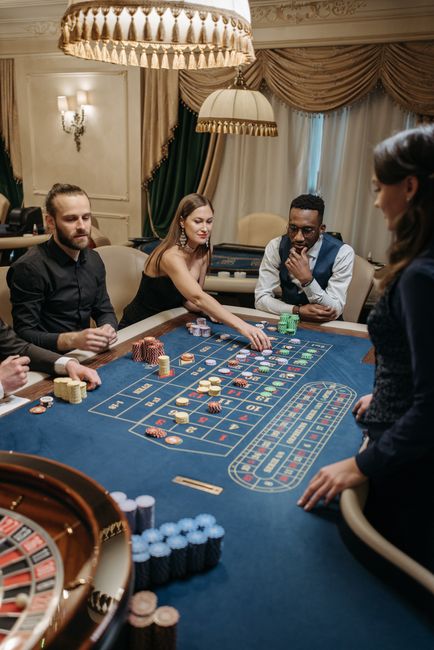
The Math and Mindset Behind Winning at Slots, Poker, and Betting
Most players lose money at iGaming for the same reason most dieters fail: they make decisions based on feelings instead of systems. A slot player chases a bonus because the screen feels "hot." A sports bettor doubles down on a losing team because he "believes in them." A poker player calls an all-in with second pair because folding feels weak. The house doesn't beat you with bad luck. It beats you with math, plus your own inability to respect it.
That's not a moral lecture. It's an operational reality, and once you internalize it, the whole experience sharpens. You stop treating casino games, betting, and poker as a single blurry hobby and start seeing three separate disciplines, each with its own rules, edges, and skill ceilings.
The Real House Edge: It's Smaller Than You Think, and That's the Trap
Ask the average slot player what the house edge is on their favorite machine, and you'll get a shrug. Ask a blackjack player and they'll say "half a percent" without mentioning that the actual number swings wildly based on rules and their own mistakes. Some of the clearest guidance on this comes from SHBET.
Here's the truth that matters: the edge on most online casino games is small enough that short sessions feel winnable. A slot with a 96% RTP only grinds you down 4 cents per dollar on average, but over thousands of spins that 4% becomes a certainty. Blackjack player perfect strategy can push the edge under 0.5%, but one bad rule, like a 6:5 payout on blackjack instead of 3:2, can double or triple the house advantage overnight.
- Slot RTP vs. volatility: A 96% RTP machine with high volatility can eat 200 spins before paying anything. A 94% RTP low-volatility slot dribbles out small wins constantly. Same theoretical return, completely different experience.
- Blackjack rules matter more than "feeling sharp": Dealer stands on soft 17, double after split allowed, late surrender available. If two of those three aren't present, find another table.
- Roulette is binary: Single-zero wheels (European) carry a 2.7% edge. Double-zero (American) jumps to 5.26%. That single pocket costs you more than any betting system ever will.
Betting: Where Information Beats Instinct
Sports betting is the closest thing to a meritocracy in iGaming, mostly because the market is inefficient for small windows of time. Sharp bettors don't predict winners. They find lines that are mispriced, then bet them before the book corrects.
A practical example: an NFL team opens at -3 after an injury to the opposing quarterback, but the line doesn't move because recreational money keeps hammering the popular team. If your model says the true line should be -6, you've found value. It doesn't guarantee a win, but over 100 bets, that edge compounds. Anyone weighing up options should see SH BET.
The problem is most bettors do the opposite. They bet favorites, parlays, and their favorite teams, all of which carry a higher margin for the sportsbook. Same-game parlays are the industry's golden goose because they hide a massive hold inside an attractive payout.
- Track every bet in a spreadsheet: stake, odds, market, and result. After 200 bets, you'll know your actual ROI, not your remembered one.
- Shop lines across at least three books. A half-point on a key number like 3 or 7 in football is worth real money.
- Avoid parlays unless you're getting a promotion that offsets the compounded edge against you.
Poker Is Not Gambling, It's Applied Psychology With Cards
Poker occupies a strange space. The casino takes a rake, so the table is a losing proposition collectively, but individual players can win consistently because they're exploiting other players' mistakes.
Cash game poker rewards patience and position. Tournament poker rewards aggression and survival. The players who lose are usually the ones who can't separate the two. They play cash games like tournaments, chasing stacks, and they play tournaments like cash games, folding too much and blinding out.
If you're serious about poker, one concept separates you from the field: range advantage. Don't ask "what does he have?" Ask "what hands would he play this way?" Then compare that range to your own and act on equity, not gut feeling. That single shift takes most players from losing to break-even. The next shift, learning to exploit population tendencies, takes them into profit.
Quick bankroll rules that actually work
- Cash games: 20 buy-ins minimum for no-limit hold'em. Less than that and variance will tilt you.
- Tournaments: 50 to 100 buy-ins, because tournament variance is brutal.
- Sports betting: 1 to 2% of bankroll per bet, never more, no matter how confident you feel.
- Slots: Treat the money as entertainment spend, not investment capital. If you wouldn't pay it for a concert ticket, don't spin it.
Bonuses, Free Spins, and the Fine Print Nobody Reads
Welcome bonuses look generous until you read the wagering requirement. A 100% match up to $500 with a 40x rollover means you need to bet $20,000 before withdrawing anything. If the game contributes only 20% toward that requirement, the real number is $100,000. That's not a bonus. That's a job with negative pay.
Read these four things before claiming any offer:
- Wagering requirement (look for 20x or lower)
- Game contribution percentages (slots usually 100%, table games often 10% or less)
- Maximum bet per spin while clearing the bonus (often $5 or $10)
- Time limit to clear it (7 to 30 days is typical)
Free spins are usually the friendliest promotion because the wagering is often only on winnings, not the initial value. Still, check the spin value. 10 free spins at $0.10 each is a dollar of entertainment, not a windfall.
Bankroll Discipline Is the Only Sustainable Edge
Every experienced player eventually lands on the same truth: the game you play matters less than how you manage the money behind it. A 2% edge in poker disappears if you're playing scared money. A 96% RTP slot still drains you if you're spinning $5 a pull on a $200 bankroll.
Set limits before you log in, not after. Most regulated platforms let you set deposit limits, session reminders, and cool-off periods. Use them. Not because you're weak, but because the games are designed to keep you engaged past the point of rational decision-making.
The players who last, the ones who treat iGaming as a long-term hobby rather than a lottery ticket, share three habits: they track results, they specialize in one or two game types, and they walk away when the math says to. That's it. No secret system, no hot streak, no crystal ball. Just discipline applied consistently.
That's the unglamorous reality of the entire industry. The lights, the animations, the near-misses, all of it exists to make you forget the numbers. Remember them instead, and you'll be the player the house least wants at the table.
tag: iGaming

Sophie Bramley Author
Group books by colour, mix in ceramics and framed art, and leave breathing room so each shelf feels calm and considered.
YOU MAY ALSO LIKE
Styling Open Alcove Shelves Without Creating Clutter
Sep 21
10A bespoke bench with hidden storage makes the most of a bay, offering a comfortable spot for reading and watching the street.
read more
Building a Window Seat in a Bay Window
Sep 16
10Bay windows need flexible window dressings, so consider made-to-measure Roman blinds, thermal curtains or a combination that suits the room.
read moreAlcove Ideas
-

ERRIC CATONA
Victorian terraces often have awkward corners, but bespoke joinery, folding furniture and clever lighting can make every inch count.
May 19, 2016 at 5.12 pm
Reply
ERRIC CATONA
Use tall pull-out larders, wall rails and drawer dividers to keep utensils tidy without losing precious worktop space in a small kitchen.
May 19, 2016 at 5.12 pm
Reply -
ERRIC CATONA
You do not need a sea view to evoke the coast; weathered wood, soft blues and natural textures can create a relaxed seaside feel.
May 19, 2016 at 5.12 pm
Reply
Bay Windows
Your email address will not be published.