
Small Space Solutions for Victorian Terraced Houses
Why Victorian Terraces Feel Both Generous and Tight
There is a reason Victorian terraces remain so beloved. High ceilings, deep skirting boards, sash windows and picture rails give even modest rooms a sense of dignity. Yet the same houses can be surprisingly tricky to live in. Hallways are long and narrow, kitchens often run in a galley, box rooms refuse to behave as proper bedrooms, and almost every main room has a chimney breast with two awkward alcoves either side.
The good news is that these problems are really opportunities. Victorian builders left us a framework of generous proportions and solid walls, which means small-space solutions can be built in, folded away, or layered on with very little disruption. The aim is not to fight the architecture but to let it do more work.
Bespoke Joinery: Making Awkward Alcoves Earn Their Keep
Off-the-shelf furniture almost never fits a Victorian alcove. There is always a gap, a wobble, or a wasted 20cm. Bespoke joinery solves this beautifully and often costs less than you expect, because the units are simple boxes and shelves rather than elaborate cabinetry.
- Alcove shelving: fit shelves from skirting to cornice, then add lower cupboards with doors to hide the clutter that would otherwise sit on display.
- Chimney breast bench: a window seat or bench tucked into an alcove can double as shoe storage, toy storage or a reading nook.
- Under-stair drawers: replace a shallow cupboard with deep pull-out drawers, which are far easier to use in a narrow hallway than a door that swings open.
- Hallway pegs and slim benches: a 30cm-deep bench with hooks above keeps coats and bags off the floor without stealing walking space.
Paint joinery in the same colour as the walls to blur the edges and make the room feel wider. A single bold colour on the shelves themselves can add personality without bulk.
Folding and Multi-Purpose Furniture
In a small terrace, every piece of furniture should do at least two jobs. Folding designs have improved enormously, and they no longer look like camping equipment.
- Drop-leaf dining tables: a slim console by day, a table for four by night. Look for a gate-leg design that stays steady when open.
- Wall-mounted desks: a flap-down desk in a hallway or box room creates a work zone that disappears at 6pm.
- Nesting tables: three small tables that tuck under one another are ideal beside a sofa or armchair.
- Daybeds and sofa beds: a daybed with drawers underneath works as a sofa, a guest bed and a storage unit in one.
- Folding chairs: keep two or four slim folding chairs on a wall hook for when guests arrive.
Choose furniture with legs rather than solid bases. Seeing floor beneath a piece makes a room feel more open, and it makes cleaning easier too.
Layered Lighting for Tall, Narrow Rooms
Victorian rooms are tall, which is lovely, but a single pendant light leaves the top of the room bright and the corners gloomy. Layered lighting is the answer.
- Wall lights: fit them at eye level on either side of a chimney breast or sofa to wash light across the room without taking up surface space.
- Picture lights: a slim picture light above a mantel mirror or artwork adds a warm, hotel-like glow.
- Floor lamps: a slim lamp in a dark corner lifts the whole room. Choose one with a small footprint.
- Dimmable bulbs: warm white bulbs around 2700K, on dimmers, let you shift from task light to cosy evening light in seconds.
Avoid downlights if you can. They flatten a room and cast harsh shadows. Instead, put light where you need it: over a table, beside a chair, along a hallway.
Colour, Mirrors and Floors: Simple Tricks That Buy Space
Small-space styling is often about continuity. When the eye is not stopped by edges and contrasts, a room feels bigger.
- Run flooring through: the same floor in hallway, living room and kitchen makes the whole ground floor read as one space.
- Mirror opposite a window: a well-placed mirror doubles the light and the view, especially in a narrow room.
- Keep furniture low: low sofas and slim shelving leave the upper walls clear, which makes ceilings feel higher.
- Use vertical lines: tall plants, long curtains hung near the ceiling, and vertical panelling all draw the eye upwards.
If you love colour, paint the alcoves, the inside of shelves, or the back of a door. Small, deliberate bursts of colour feel intentional rather than overwhelming.
Everyday Habits That Keep Small Rooms Feeling Calm
Storage only works if it is easy to use. A few simple habits stop a small terrace from tipping into clutter.
- Keep a hook or basket by the front door for keys, leads and post.
- Give every item a home, and if something has no home, question whether it needs to stay.
- Do a five-minute reset each evening in the main living space.
- Choose one display surface per room and keep the rest clear.
Victorian terraces reward a little planning. Fit the alcoves, fold the furniture, layer the light, and the house will feel warmer, calmer and far more generous than its footprint suggests.
tag: Small Spaces

Emily Hartley Author
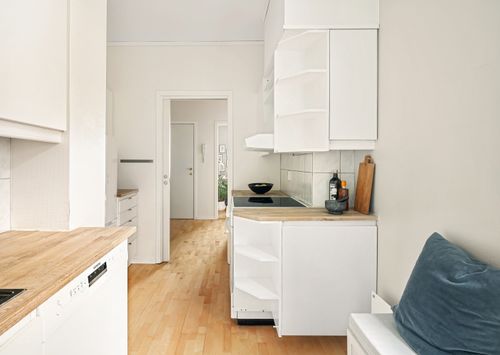
Use tall pull-out larders, wall rails and drawer dividers to keep utensils tidy without losing precious worktop space in a small kitchen.
YOU MAY ALSO LIKE
Maximising Storage in a Compact Flat Kitchen
Aug 30
10You do not need a sea view to evoke the coast; weathered wood, soft blues and natural textures can create a relaxed seaside feel.
read more
Bringing Coastal Calm to an Inland Home
Aug 26
10Subtle nautical touches work best when they are understated, such as a rope-wrapped mirror or a driftwood shelf in a hallway.
read moreAlcove Ideas
-

ERRIC CATONA
The space beneath a staircase can become a cloakroom, wine rack or pull-out pantry with careful planning and custom cabinetry.
May 19, 2016 at 5.12 pm
Reply
ERRIC CATONA
Chimney breasts create awkward recesses, but fitted wardrobes can turn them into streamlined storage with hanging space and drawers.
May 19, 2016 at 5.12 pm
Reply -
ERRIC CATONA
Combine a dimmable ceiling fixture with floor lamps, table lamps and wall lights to build a warm, flexible scheme for evenings.
May 19, 2016 at 5.12 pm
Reply
Bay Windows
Your email address will not be published.