
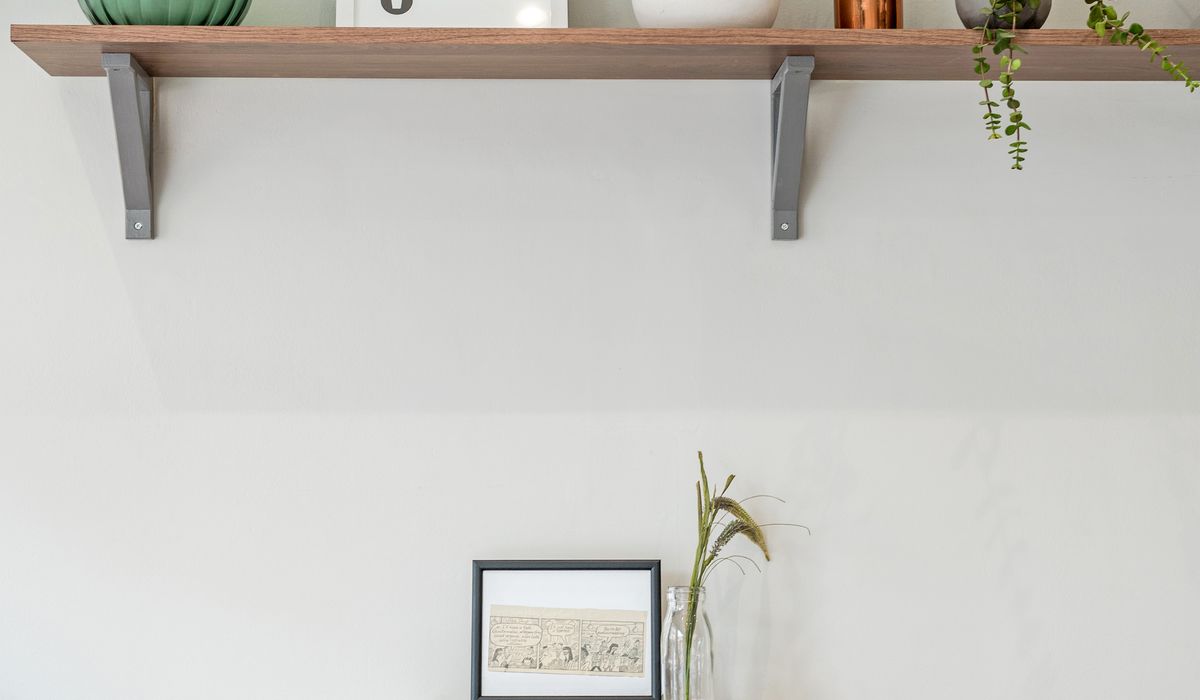
Layering Lighting in a Cosy Living Room
Start with the Ceiling Light You Can Actually Dim
Most living rooms begin with a single switch in the middle of the ceiling, and most of the cosiness problem starts right there. A bright pendant at full output flattens a room, casts hard shadows and makes a small space feel like an office.
The fix isn't to remove the ceiling light; it's to make it the quietest layer in the scheme. Swap in a dimmable bulb — 2700K warm white, around 800 lumens for a room up to 15 square metres. Then check the dimmer switch is compatible with LEDs; buzzing and flicker usually mean the switch and the bulb are arguing.
Fit a shade that pushes light downwards and sideways rather than straight out. An opal or fabric drum shade, or a wide shallow bowl, softens the glare. On a typical evening the ceiling light wants to sit at 20-40 per cent, doing the job of ambient wash rather than illumination.
Floor Lamps: Anchor the Corners
A floor lamp in the corner behind a sofa transforms how a room reads at night. Aim for a shade that sits just below eye level when you're seated — roughly 1.2 to 1.4 metres to the top of the shade — so light falls on the page rather than into your eyes.
Uplighters, which throw light at the ceiling, are brilliant in small rooms because they add height without taking up floor area.
Placement matters more than wattage:
- Angle a downward-facing shade over the arm of a sofa for reading.
- Use an uplighter in the darkest corner furthest from the door.
- Keep cable runs behind furniture; a flat plug and a short extension under the sofa works well.
- Choose a base no wider than 25cm if space is tight — slim weighted bases squeeze between sofa and wall.
Table Lamps: The Middle Layer
Table lamps fill the gap between floor level and ceiling, and they make a room feel inhabited. Three is a reliable number in a small living room: one on a side table, one on a console or windowsill, one on a shelf or desk corner.
Height is what people get wrong. A lamp on a side table should have its shade roughly level with your shoulder when seated — around 55-70cm from table to shade top. Lower and you're looking at the bulb; higher and the light spreads too thinly.
Small tables suit narrow bases and tapered shades. If surface space is scarce, a clamp lamp on a shelf edge or a lamp on a slim wall-mounted shelf gives the same pool of light without stealing a tabletop.
Use lower output here — 400-500 lumens, or a 4-6W LED — and switch them separately from the ceiling.
Wall Lights: Space-Saving Warmth
Wall lights are the most underused tool in small-space styling. They put light exactly where you need it and take up no floor or table space at all.
Plug-in versions are ideal if you rent or don't want to chase cables into the wall; run the cable down and along the skirting, hidden in trunking painted to match. Switched ones mean you don't have to reach behind a sofa.
Good spots:
- Either side of a sofa, roughly 1.5-1.7 metres from the floor, pointing down for reading.
- Above a picture or shelf, washing light down the wall to add depth.
- In a narrow alcove beside a chimney breast, where a lamp would block the walkway.
Bulbs, Warmth and Dimming Compatibility
Consistency makes a layered scheme feel deliberate rather than accidental. Keep every bulb at the same colour temperature — 2700K, or 2400K for a very warm, candlelit feel. Mixing 2700K and 4000K in the same sightline makes a room look disjointed, however lovely the fittings.
Match the beam too. A wide 100-120 degree beam in a table lamp gives a soft pool; a narrow 36 degree beam in a wall light gives a crisp wash down plaster. Buy dimmable bulbs for every fitting, even the ones you think you'll always run at full.
Check the total load before adding a dimmer to a circuit. LED loads are far smaller than halogen, so older dimmers sometimes need a minimum-load module to stop flicker at low levels.
Switching It All Together in a Small Room
Aim for three or four independent switch points: ceiling, floor lamp, table lamps (grouped on one plug-in dimmer is fine) and wall lights. Smart plugs and inline dimmers make this easy without rewiring, and app control lets you set scenes — bright for cleaning, mid for dinner, low for the last hour before bed.
The practical test: turn everything on at full, then dim from the top down. Ceiling to 30 per cent, table lamps to half, then floor lamps until the corners glow and the middle of the room stays soft. If you can see a bare filament from any seat, shade it.
Light bounces off pale matt walls and disappears into dark glossy ones, so a warm white or soft clay colour reflects more of that low-level glow. Add a mirror opposite a lamp and you get a second light for nothing — as long as it isn't reflecting a bare bulb.
tag: Lighting

James Whitcombe Author
An adjustable wall light or slim floor lamp should cast a focused glow over your book without glaring into the rest of the room.
YOU MAY ALSO LIKE
Choosing the Right Light for a Reading Nook
Aug 9
10Darker shades can make an alcove feel intentional and snug, while soft neutrals help it blend seamlessly with the wider room.
read more
Selecting a Calm Colour Palette for Alcoves
Aug 7
10North-facing rooms can feel chilly, so warm terracotta, ochre and olive tones add depth without overwhelming the natural light.
read moreAlcove Ideas
-

ERRIC CATONA
With a spirit level, timber boards and concealed brackets, you can create neat floating shelves that fit an awkward recess perfectly.
May 19, 2016 at 5.12 pm
Reply
ERRIC CATONA
Sand, prime and repaint an old chest, then add new handles and felt liners to give it a fresh life in a bedroom or hallway.
May 19, 2016 at 5.12 pm
Reply -
ERRIC CATONA
A bay window can host a dressing table, a window seat or a small armchair, depending on how much light and privacy you need.
May 19, 2016 at 5.12 pm
Reply
Bay Windows
Your email address will not be published.