
Styling Open Alcove Shelves Without Creating Clutter
Alcoves are one of the great gifts of a British period home. Those shallow recesses either side of a chimney breast are begging for shelving, and when they are done well they can transform a dim, awkward corner into the warmest spot in the room. The trouble is that open shelves have no door to hide behind. Every object is on display, and without a plan, a few months of "I'll just pop this here" turns a considered display into a jumble of receipts, orphaned cables and half-read paperbacks.
The good news is that calm, styled alcove shelves follow a handful of simple rules. Once you know them, you can rearrange in twenty minutes and keep the whole thing looking intentional rather than accidental.
Begin with a completely empty shelf
Before you style anything, take everything off. Yes, all of it. It is tempting to shuffle the same items around, but you will only recreate the same clutter. Lay the contents of your shelves out on the floor and be honest about what earns its place. Anything broken, unloved, or kept purely out of habit goes into a box for the charity shop or the loft.
While the shelves are bare, give them a wipe and notice the light. Alcoves can be surprisingly dark, especially the lower shelves. If yours feel gloomy, a pale paint finish on the back of the alcove will bounce light around and make everything on the shelves read more clearly.
Now decide on your zones. Rather than treating the whole alcove as one unit, think of it as two or three vertical sections. A common approach is:
- Eye level: your best pieces — framed art, a favourite ceramic, a small plant.
- Just above and below eye level: books, which are visually dense and work best in the middle ground.
- Lowest shelves: heavier items, baskets, or a stack of large books that anchor the whole arrangement.
Group books by colour, not by author
This is the single change that makes the biggest difference. A shelf of books arranged alphabetically reads as a library. A shelf arranged by colour reads as a design choice. You are not losing the books, you are simply changing the filing system to suit the room.
Sort your books into loose colour families: deep blues and blacks, reds and oranges, yellows and creams, greens, and neutrals. Then place them in blocks. Two or three blocks of contrasting colour per shelf is plenty; more than that starts to feel busy. Keep the spines facing out and line them up so the front edges sit flush.
A few practical notes on the books themselves:
- Mix orientations. A row of upright books broken by one small horizontal stack gives the eye a rest and creates a natural perch for a small object.
- Don't fill the shelf end to end. Leave a gap of at least a hand's width at one end.
- Remove the dust jackets from a few hardbacks if you want a more cohesive, muted palette. Bare cloth spines often look softer and more expensive.
- Keep heights loosely related. Sudden six-inch jumps between neighbouring books create visual noise.
Layer in ceramics, art and one or two surprises
Books alone can feel flat. The trick is to add objects that vary in height, texture and opacity so the shelf has depth. Work in odd numbers — three objects grouped together almost always look better than two or four.
Ceramics are the easiest win. A small jug, a bowl, a lidded pot: keep them in a similar colour family, whether that is chalky whites, earthy terracottas, or deep glazed greens. Placing a small ceramic on top of a horizontal stack of books is a classic move for a reason — it lifts the object to eye level and ties the two elements together.
Framed art works beautifully on open shelves, but keep it small. Lean frames against the back of the alcove rather than hanging them, and overlap two at slightly different heights for a relaxed, layered look. A single larger frame on a middle shelf can act as a focal point for the whole alcove.
Finish with something living or natural: a trailing plant, a few dried stems in a narrow vase, a smooth stone, a candle. One or two natural elements per section is plenty. Anything more and you tip into a garden centre display.
Leave breathing room — the most important rule
Clutter on open shelves is rarely about having too many things. It is about not enough space between them. Negative space is what makes a shelf feel calm and considered, and it costs nothing.
Aim for roughly a third of each shelf to be empty. Leave a clear margin at both ends rather than running objects right up to the side walls of the alcove. Vary the density as you go up: heavier, fuller shelves low down, lighter and airier shelves at the top. This gives the whole arrangement a sense of visual weight settling downwards, which feels grounded rather than top-heavy.
If a shelf feels wrong and you cannot work out why, try removing one item. Nine times out of ten, that is the fix.
Keeping it that way
Styled shelves need a light touch to stay styled. Once a month, take five minutes to put stray items back where they belong and straighten the books. Keep a small basket on the lowest shelf for the genuinely useful things — chargers, keys, reading glasses — so they have a home without cluttering the display.
Resist the urge to add more. The shelves that look loveliest in magazines are almost always the ones with the fewest objects, arranged with the most care. Choose less, place it deliberately, and let the space around it do the work.
tag: Alcove Ideas

Emily Hartley Author
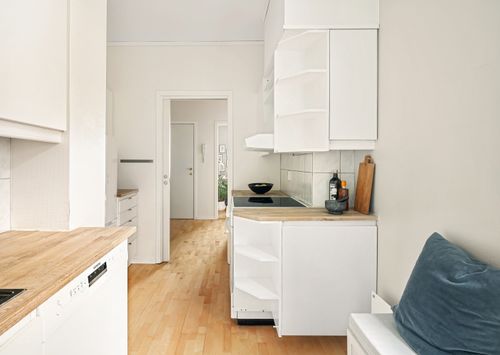
A bespoke bench with hidden storage makes the most of a bay, offering a comfortable spot for reading and watching the street.
YOU MAY ALSO LIKE
Building a Window Seat in a Bay Window
Sep 16
10Bay windows need flexible window dressings, so consider made-to-measure Roman blinds, thermal curtains or a combination that suits the room.
read more
Choosing Curtains and Blinds for Bay Windows
Sep 10
10Victorian terraces often have awkward corners, but bespoke joinery, folding furniture and clever lighting can make every inch count.
read moreAlcove Ideas
-

ERRIC CATONA
Use tall pull-out larders, wall rails and drawer dividers to keep utensils tidy without losing precious worktop space in a small kitchen.
May 19, 2016 at 5.12 pm
Reply
ERRIC CATONA
You do not need a sea view to evoke the coast; weathered wood, soft blues and natural textures can create a relaxed seaside feel.
May 19, 2016 at 5.12 pm
Reply -
ERRIC CATONA
Subtle nautical touches work best when they are understated, such as a rope-wrapped mirror or a driftwood shelf in a hallway.
May 19, 2016 at 5.12 pm
Reply
Bay Windows
Your email address will not be published.